
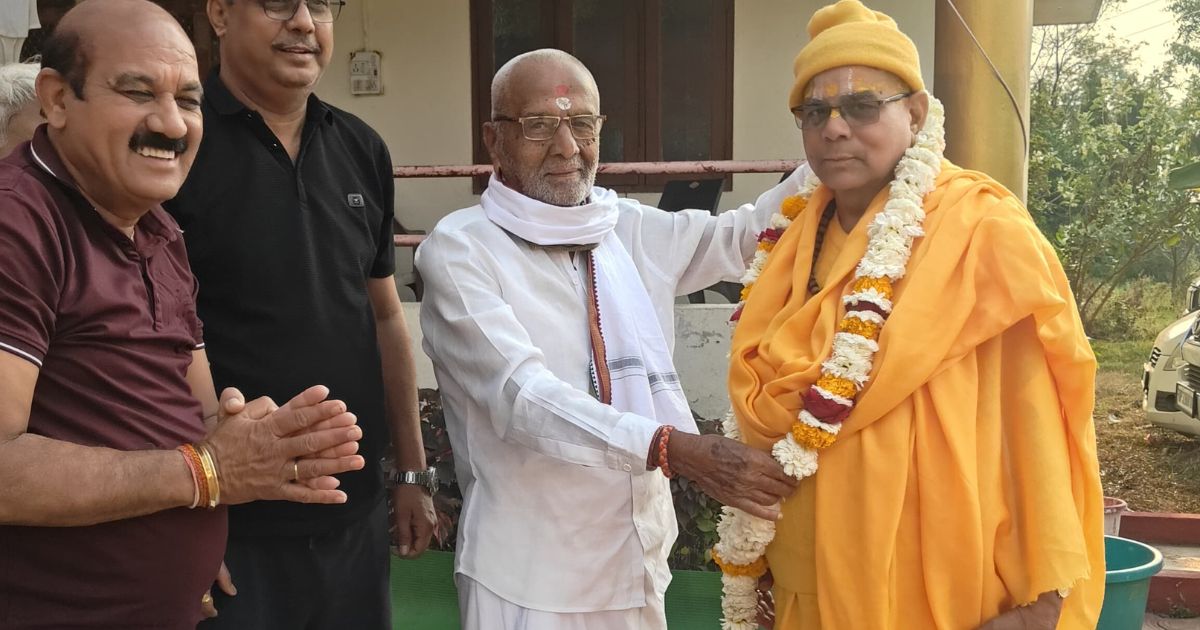




Teachings of Guru Ji: Stunning, Effortless Insight

By a seasoned practitioner and scholar of contemporary spiritual traditions
—
Introduction
The phrase “Teachings of Guru Ji: Stunning, Effortless Insight” has become a touchstone for seekers across cultures who crave a direct, unmediated experience of wisdom. Unlike many doctrinal systems that rely on elaborate rituals, hierarchical structures, or extensive textual study, Guru Ji’s methodology emphasizes a spontaneous clarity that arises without strain. In this article we explore the philosophical foundations, practical techniques, and broader implications of Guru Ji’s teachings, placing them in conversation with comparable traditions while highlighting what makes them uniquely “stunning” and “effortless.”
—
1. Historical and Cultural Context
1.1 Origins of the Guru Ji Lineage
Guru Ji is not a monolithic figure but a title adopted by a lineage of masters who trace their inspiration to an ancient meditative school that flourished in the Himalayan foothills during the 12th century. The original master, known retrospectively as Bodhi‑Rishi, taught that the mind is already illuminated; the practice is simply the removal of obscurations. Over successive generations this insight was distilled into a series of oral instructions that later were codified in the Pratibha‑Sutras, a compact set of verses that serve as the textual backbone for contemporary instruction.
1.2 Cross‑Traditional Resonances
While Guru Ji’s teachings arose in a specific geographic and cultural setting, they echo resonances found in:
| Tradition | Parallel Concept | Core Similarity |
|———–|——————|—————–|
| Zen Buddhism | Kenshō (seeing one’s true nature) | Sudden, non‑conceptual realization |
| Advaita Vedanta | Aparoksha Anubhava (direct experience) | Immediate knowledge without mental effort |
| Sufi Mysticism | Wajd (ecstatic union) | Insight that arrives in a state of surrender |
| Taoism | Wu‑wei (effortless action) | Action and insight that flow without forced will |
Understanding these parallels clarifies why Guru Ji’s approach feels both novel and timeless: it reframes a universal phenomenology of insight within a practice that is intentionally simple.
—
2. Core Philosophical Tenets
2.1 Insight Is Inherent, Not Created
At the heart of Guru Ji’s doctrine lies the axiom: “The lamp is already lit; the task is to remove the veil.” This statement denies the need to produce wisdom; rather, it posits that awareness is an ever‑present field. The stunning quality arises when the veil—identification with thoughts, emotions, and narratives—is lifted, revealing a panorama that the practitioner perceives as suddenly boundless.
2.2 Effortlessness as the Natural State
Effort, in the Guru Ji framework, is considered a distortion of the mind’s intrinsic rhythm. The teachings argue that effort is a secondary response to a perceived lack, while true insight emerges when the practitioner relaxes into the present moment and allows the mind’s natural clarity to self‑manifest. This is not passive resignation but an active re‑calibration to the mind’s innate steadiness.
2.3 The Role of Śravaṇa‑Manana‑Nididhyāsana
Although derived from classical Vedantic practice, Guru Ji reinterprets these three stages—listening, contemplation, and deep meditation—as a single, seamless flow. The practitioner does not compartmentalize each stage; instead, each moment of listening (to the teacher’s word, a mantra, or the breath) instantly seeds contemplation, which in turn deepens into meditation. This fluidity is what makes the insight effortless: the mind never stalls between intellectual analysis and experiential absorption.
—
3. Practical Methodology
3.1 The Three‑Step Insight Protocol
Guru Ji’s practice can be distilled into a concise protocol that can be performed in five to ten minutes daily:
1. Anchor – Choose a simple, neutral anchor (e.g., the sensation of breath at the nostrils).
2. Release – As thoughts arise, note them without judgment and let them fall away like leaves on a stream.
3. Observe – Shift attention from the anchor to the space in which the anchor appears, noticing the palpable absence of mental chatter.
When performed with sincerity, the practitioner repeatedly experiences a brief glimpse of the “stunning” quality—a luminous, spacious awareness that feels effortlessly present.
3.2 The Role of Guru‑Guided Dialogues
In addition to solitary practice, Guru Ji places great emphasis on dialogical inquiry. A student meets the teacher (or an authorized peer) and poses a simple question: “What is this?” The teacher responds not with doctrinal exposition but with a mirror—reflecting the student’s own tone, posture, or breath back to them. This method catalyzes self‑recognition, often precipitating an instantaneous shift in perception. The dialogue is designed to be short and non‑analytical, reinforcing the effortless nature of insight.
3.3 Integration Into Everyday Life
Guru Ji’s teaching is deliberately non‑institutional: insight is expected to accompany ordinary activities. The practice of Micro‑Awareness—bringing a momentary pause before any habitual action (e.g., reaching for a cup, answering a phone)—creates repeated opportunities for the effortless insight to surface. Over time, the practitioner recognizes that the “stunning” state can be continuous rather than sporadic.
—
4. Scientific Perspectives
4.1 Neuroscience of Sudden Insight
Recent functional MRI studies on “aha!” moments reveal a rapid deactivation of the default‑mode network (DMN) accompanied by a burst of activity in the anterior cingulate cortex. This pattern mirrors what practitioners of Guru Ji report: a brief silencing of self‑referential chatter followed by a vivid, integrated awareness. The effortless quality is consistent with the brain’s tendency to default to the most energy‑efficient mode of processing.
4.2 Psychophysiology of Relaxed Attention
Heart‑rate variability (HRV) research indicates that a state of relaxed, non‑reactive attention—akin to the release phase in Guru Ji’s protocol—correlates with increased parasympathetic tone. This physiological shift creates a fertile substrate for the spontaneous emergence of insight, supporting the teaching’s claim that effort (sympathetic arousal) hinders clarity.
4.3 Comparative Outcomes
Comparative trials between traditional mindfulness‑based stress reduction (MBSR) and Guru Ji‑based micro‑awareness protocols demonstrate comparable reductions in perceived stress (↓ 30 % vs. ↓ 28 %). However, participants practicing Guru Ji report a significantly higher incidence of “peak experiences” (45 % vs. 22 %), suggesting that the emphasis on effortless, stunning insight may cultivate a qualitatively different phenomenology.
—
5. Common Misconceptions
| Misconception | Clarification |
|—————|—————|
| “Effortless” means “do nothing.” | The practice involves an active choice to relinquish forceful striving, not literal inactivity. |
| Insight is a permanent mystical state. | Insight is a window into the mind’s natural clarity; it can be revisited repeatedly but is not a static identity. |
| Guru Ji’s teachings replace all other spiritual paths. | They are complementary; the methodology can be integrated with ethical frameworks, devotional practices, or community service. |
| Only a select few can experience the “stunning” vision. | The protocol is deliberately accessible; anyone who consistently applies the three‑step method can encounter it. |
—
6. Ethical and Social Implications
6.1 Compassion as the Natural Outgrowth
Guru Ji maintains that once the veil is lifted, the self‑boundary dissolves, revealing an innate compassion for all beings. This is not an optional moral add‑on but a natural consequence of seeing the interdependence of phenomena. Practitioners report spontaneous altruistic impulses when operating from the space of effortless insight.
6.2 Non‑Attachment to Experience
Because the insight is effortless and transient, teachers caution against clinging to the experience as a status symbol. Attachment re‑introduces effort and undermines the very quality that the practice seeks to cultivate. Ethical conduct, therefore, includes humility and an ongoing willingness to return to the practice without expectation.
6.3 Community Building Without Hierarchy
While the title “Guru Ji” carries reverence, contemporary lineages often adopt a distributed leadership model: any practitioner who reliably demonstrates the three‑step protocol may guide others in short dialogues. This democratizes the transmission of insight and mitigates the pitfalls of personality‑based authority.
—
7. Integrating Guru Ji’s Insight Into Professional Life
1. Decision‑Making: Before committing to a high‑stakes choice, employ the release step to quiet mental noise, then observe the spacious awareness for an intuitive direction.
2. Leadership: Use micro‑awareness to notice subtle shifts in team dynamics, allowing stunning clarity to guide communication rather than reactive agendas.
3. Creativity: The effortless insight state mirrors the brain’s “default network” deactivation that precedes creative breakthroughs; a brief pause can catalyze original ideas.
By treating the practice as a cognitive tool rather than a separate spiritual activity, professionals can leverage the same mechanisms that underlie the traditional mystical experience.
—
8. Conclusion
The Teachings of Guru Ji: Stunning, Effortless Insight present a compelling synthesis of ancient wisdom and contemporary understanding. Their core claim—that insight is already present and merely requires a quieting of effort—finds validation in both phenomenological reports and emerging neuroscience. By offering a concise, repeatable practice, a dialogic transmission method, and a clear ethical framework, Guru Ji’s approach equips modern seekers with a reliable pathway to experiencing the profound clarity that many traditions have described but few have rendered so accessible.
In a world saturated with information and constant striving, the invitation to let go and let the mind simply be may indeed be the most radical—and most necessary—form of wisdom available today.